Investing in high-grade solvents and durable substrates yields zero return if they dry out before use. Industrial environments demand robust tools. Wipes must remain saturated to function properly.
At the workbench, workers with soiled hands require immediate access to cleaning solutions. They need one-handed dispensing capabilities. They cannot afford to contaminate the surrounding area or struggle with compromised packaging.
This article provides procurement and facility managers with an evidence-based framework for evaluating dispensing formats. You will discover practical ways to minimize waste and ensure compliance. We will show you how to drive worker adoption through better packaging choices.
Key Takeaways
Moisture Retention is the Primary Cost Driver: Substandard seals lead to solvent evaporation, causing premature dry-out and increasing replacement costs by up to 20%.
Dispensing Mechanics Matter: One-handed, "no-rope" dispensing prevents cross-contamination and reduces the waste of pulling multiple wipes accidentally.
Workbench Footprint Dictates Format: Stationary canister brackets or central high-capacity buckets must align with workflow constraints and available bench space.
Chemical Compatibility is Non-Negotiable: Packaging materials must resist degradation from the harsh VOCs and degreasers found in heavy duty cleaning wipes.
The Hidden Costs of Poor Packaging on the Shop Floor
Packaging failures directly drain facility resources. Many facilities overlook how ambient factory temperatures accelerate solvent loss. High heat environments vaporize volatile cleaning agents quickly. Lids with simple friction-fit closures cannot trap these vapors. They lack the airtight seal required to retain moisture. In contrast, gasket-sealed lids create a physical barrier. They lock in the cleaning agents effectively.
Another major issue is the "roping" phenomenon. This occurs when dispensing orifices poorly match the wipe substrates. A worker pulls one sheet, but three come out. They rarely stuff the extra sheets back. This artificially inflates your usage rates. It depletes inventory faster than necessary.
Cross-contamination presents serious risks at individual workstations. Poorly designed lids require two clean hands to open. A mechanic covered in oil cannot easily open these containers. They either avoid using the product entirely, or they transfer grease and particulates to the packaging exterior. This creates a messy, hazardous environment for the next user.
To combat these issues, specialized grease cleaning wipes require airtight, chemical-resistant housing. They must maintain their active solvent load over time. Without proper seals, the aggressive degreasers evaporate. You are left with dry, useless cloths.
Common Mistakes in the Shop
Storing wipes near heat-generating machinery, which accelerates evaporation.
Ignoring broken lid hinges instead of replacing the container immediately.
Failing to match the orifice size to the specific nonwoven fabric thickness.
Canisters and Tubs: The Standard for Individual Workstations
Rigid canisters dominate localized repair stations. Their design relies on high-density polyethylene (HDPE) construction. This polymer offers excellent chemical resistance. Lids typically feature threaded, flip-top, or snap-close mechanisms. These closures aim to balance access with moisture retention.
These tubs offer distinct advantages for the workbench. They have a small footprint. They integrate easily into crowded pegboards or tool chests. When properly weighted or mounted, they support true one-handed dispensing. They are ideal for single-operator use. A standard tub holds 75 to 100 wipes, matching typical individual consumption rates.
However, implementation risks exist. Unmounted canisters become top-heavy. Once the tub is less than half full, pulling a wipe lifts the entire container. Workers must use two hands to secure it. This leads to user frustration and potential contamination of the tub.
Despite these risks, canisters remain the most common form factor for standard industrial hand wipes. They provide localized convenience when deployed correctly.
Best Practices for Canister Deployment
Install customized wall brackets directly above the primary work zone.
Ensure the bracket clamps firmly around the HDPE body.
Train workers to listen for the audible "click" of a snap-close lid.
Rotate stock based on the manufacturing date to ensure peak moisture levels.
High-Capacity Buckets for Heavy Duty Cleaning Wipes
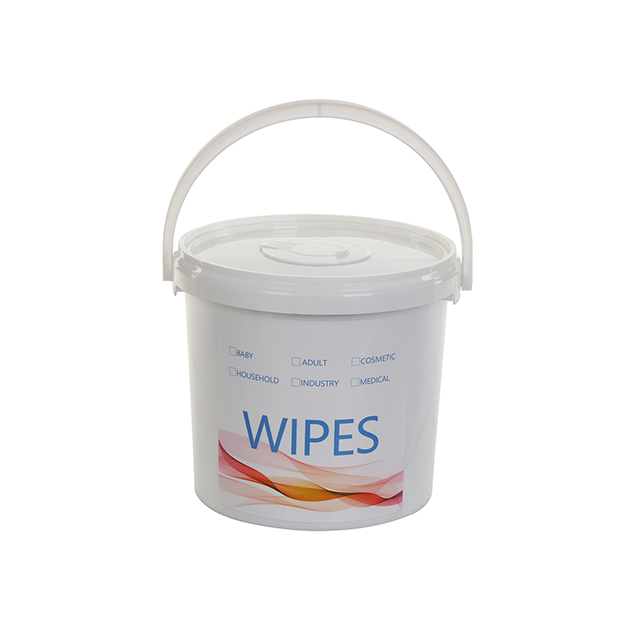
High-capacity buckets serve high-traffic areas perfectly. These large-volume rigid containers hold 150 to 400 wipes. They feature robust central pull dispensers. They also include heavy-duty handles for easy transport across the shop floor.
They provide distinct operational pros for shared spaces. They deliver the lowest cost-per-wipe at high volume. They significantly reduce restocking frequency in busy bays. A central bucket allows multiple technicians to access cleaning tools from a single, reliable hub.
When evaluating these bulk formats, you must look for specific features. Seek out buckets with secondary internal moisture barriers. Dual-seal lids offer superior protection. They prevent the large solvent volume from flashing off into the air. Quality buckets for heavy duty cleaning wipes always incorporate these advanced sealing technologies.
The primary implementation risk involves open-lid exposure. Bulk buckets contain a massive inventory. If a worker leaves the bucket unsealed in a high-temperature environment, disaster strikes. The entire bulk inventory becomes compromised. You lose hundreds of wipes in a single shift. Training and clear signage around the bucket station help mitigate this human error.
Soft Packs and Refill Pouches: Mobile vs. Stationary Viability
Flexible plastic pouches offer an alternative to rigid tubs. They use peel-and-seal stickers or rigid snap-top closures. These soft packs cater to different operational needs.
They provide several pros for specific workflows. They reduce plastic waste substantially. This helps facilities comply with corporate sustainability goals. They are highly cost-effective when used to refill existing rigid canisters. You only pay for the substrate and solvent, not the heavy plastic tub.
However, you must understand their implementation risks. Soft packs are highly vulnerable on a workbench. Sharp tools or metal shavings easily puncture the thin plastic. Furthermore, friction-adhesive seals degrade quickly. When exposed to industrial greases, the glue on a peel-and-seal sticker fails. The pack pops open, and the wipes dry out.
Because of these vulnerabilities, they are often utilized in mobile tool bags. A technician can slide a pouch into a tightly packed bag easily. But they are less effective as a standalone solution for stationary industrial cleaning wipes. They require a secondary rigid dispenser for long-term workbench survival.
Evaluating Industry Wipe Packaging for Your Facility (Decision Matrix)
Selecting the right packaging requires a systematic approach. You must evaluate multiple technical criteria. This ensures the product performs reliably under harsh conditions. A proper Industry Wipe needs an equally robust container.
First, conduct a seal integrity assessment. You must prioritize silicone or rubber-gasket lids over simple friction snaps. Volatile solvents vaporize aggressively. A mechanical friction fit cannot contain these gases. A compressible gasket creates a true hermetic seal.
Second, plan for mounting and integration. You should require wall-mount or bench-mount brackets. Brackets facilitate true one-handed dispensing. They also free up critical bench space. A clutter-free workbench improves safety and efficiency.
Third, examine the substrate-to-orifice ratio. The dispenser teeth must be calibrated for the specific thickness of the nonwoven substrate. If the teeth are too tight, the wipe shreds. If they are too loose, you experience severe roping. Testing this ratio ensures clean tearing every time.
Finally, verify chemical stability. Confirm the packaging polymer does not warp, crack, or leach. Harsh citrus, alcohol, or hydrocarbon solvents degrade cheap plastics over time. High-grade HDPE prevents this structural failure.
Table 1: Packaging Format Decision Matrix
Packaging Format
Ideal Location
Primary Benefit
Biggest Risk
Recommended Seal Type
Standard Canister (75-100ct)
Individual Workbench
Small footprint
Requires two hands if unmounted
Snap-close with internal gasket
Bulk Bucket (150-400ct)
Shared Shop Floor Bay
Lowest per-unit cost
Massive loss if left open
Dual-seal threaded lid
Soft Pack Pouch
Mobile Tool Bags
Reduces plastic waste
Punctures easily on benches
Rigid snap-top over adhesive
Conclusion
You must match the packaging format to your user frequency and space constraints. Individual benches benefit most from compact canisters. Installing mounting brackets guarantees true one-handed operation. Shared high-traffic zones require bulk buckets to minimize restocking disruptions.
Your next step should be an immediate audit of your current wipe disposal bins. High numbers of unused, dried-out wipes indicate a failing packaging seal. They also highlight improper placement on the shop floor. Treat dry wipes as a clear signal. You must test alternative formats to protect your inventory and support your workers.
FAQ
Q: What is the average shelf life of industrial wipes once the packaging is opened?
A: Shelf life varies greatly based on lid type and the ambient environment. With standard use and gasket-sealed lids, opened tubs typically last 3 to 6 months. High factory temperatures or friction-fit lids can reduce this to just a few weeks.
Q: Can flexible refill pouches be used without a rigid bucket or canister?
A: Yes, but it carries significant risk. Flexible pouches puncture easily around sharp tools. Additionally, heavy-duty greases transfer to the pouch exterior. This degrades standard peel-and-seal adhesives rapidly, exposing the wipes to air.
Q: How do mounting brackets prevent wipe waste?
A: Mounting brackets anchor the container firmly in place. This allows the worker to pull sharply with one hand. The anchoring provides the exact resistance needed to tear the wipe cleanly at the perforation. It eliminates "roping" and frustration-based waste entirely.
We stick to High and stable quality control system. products are provided and ensured by advanced machines, state of art technology, and professional team. Please feel free to contact us to start our long-term cooperation.