You are here: Home » Industry » How Do Dashboard Wipes Clean Dust Without Leaving Streaks?
How Do Dashboard Wipes Clean Dust Without Leaving Streaks?
You wipe the top of a dashboard and the pale dust disappears. Later, when light comes through the windshield, you can see exactly where the wipe passed. The first result comes from lifting loose particles. The visible path can come from what remains on the surface after the wipe moves on, including a thin film or a change in sheen. Dashboard wipes can leave an even-looking finish when they lift the dust and suit the specific trim. A small test area lets you see both results before you clean the whole panel.
How Does a Damp Wipe Lift Dust From Textured Plastic?
A damp sheet can pick up loose particles where it touches the dashboard. On a smooth section, much of the wipe face meets the surface as you move it. Textured plastic has peaks and recesses. The sheet touches the raised points first and may bridge over narrow recesses, especially if it is pulled taut. That is how a dashboard can look cleaner from the driver’s seat and still have pale dust dots inside the grain.
Look closely at one textured corner before you wipe. Loose dust often gives the raised surface a dull, fairly even cast. After one light pass, the peaks may look darker while the pale spots in the recesses stay in the same places. Those spots tell you something about contact. Additional pressure can flatten the sheet against the raised points without helping it reach every recess. Where the vehicle instructions allow it, use the method recommended for working into the texture instead of repeatedly scrubbing the same patch.
The useful part of a swipe is the area of fabric that actually meets the particles. On a curved dashboard, that may be much smaller than the size of an unfolded sheet. A fold can give you a manageable contact area and expose a fresh face when you turn it. The first side of the cloth may already look gray after wiping the wide horizontal panel near the windshield. Turning it before moving to the trim next to the air vents gives the loose dust there a cleaner surface to transfer to.
Dust near a frequently touched control can behave differently. A little oil from fingerprints can hold the particles in a smear even after the loose dust around it has transferred to the wipe. Look for the original fingerprint shape or the location of the mark next to the control. That is a cue to check the approved cleaning method for that trim and soil. A dusty recess, a clean raised area and a greasy mark can appear within a few inches and call for different levels of contact and cleaning.
Why Can the Wipe Path Stay Visible After the Dust Is Gone?
A wipe transfers particles onto the cloth while depositing some of its liquid on the panel. The amount can vary across the width of a stroke and where two passes meet. Imagine two adjacent passes with a narrow overlap. The overlap receives a second pass, and the end of a stroke may hold more liquid for a time. Once the surface dries, a visible band in either place can help you see where the effect occurred.
Compare a full panel with the edge of a single pass. In one case, the whole cleaned patch is slightly brighter than the untouched dashboard and the finish looks even within the patch. The overall sheen has changed. In another case, the original sheen is still visible across most of the panel, but there is a hazy border along a pass. That border is a localized mark. The two can look similar through a windshield, particularly when you see the reflection before you see the surface itself.
Give the patch time to dry before judging it. A temporarily wet area can look darker or shinier simply because it is wet. View the test area and a neighboring untouched area in the same light. From one angle, you may see an obvious streak where two passes overlapped. From another, you may see that the full patch reflects more light. Keeping your position consistent is particularly helpful when the dashboard curves toward the windshield and different sections catch the light differently.
A path that matches the wipe stroke gives you a clue about where to look. A mark that was already present or extends beyond the cleaned patch may come from a previous dressing, wear or a difference in the panel itself. If a mark persists after the surface has dried, check the vehicle’s care instructions before trying another cleaner. A small test also makes that decision easier because the rest of the original finish is still available for comparison.
What Should You Look for in a Wipe for Your Dashboard Finish?
Start with the finish you want to see when the panel is dry. For a factory matte surface, look for a product whose use and expected finish match that goal. For textured plastic, check whether an approved wipe can reach and lift the dust on the specific grain. For glossy black trim, inspect a small patch for haze under angled light. Texture and sheen can coexist on the same panel, so a textured matte surface calls for both checks.
Trim or finish
Inspect after drying
Factory matte
Whether the test patch still matches the sheen around it
Textured plastic
Whether pale specks remain in the recesses
Gloss-black trim
Whether haze or an overlap line interrupts the reflection
Screen or instrument lens
Check the vehicle’s specific instructions before selecting a method
Check the vehicle’s instructions for each part you plan to clean. The top of the dashboard, the clear instrument-cluster lens and the touchscreen may look like one uninterrupted zone from the driver’s seat. The manual may specify a different material or technique for each. Treat a dedicated dashboard product and the care instructions as a pair. If the display directions call for a particular cloth or method, use those directions for the display.
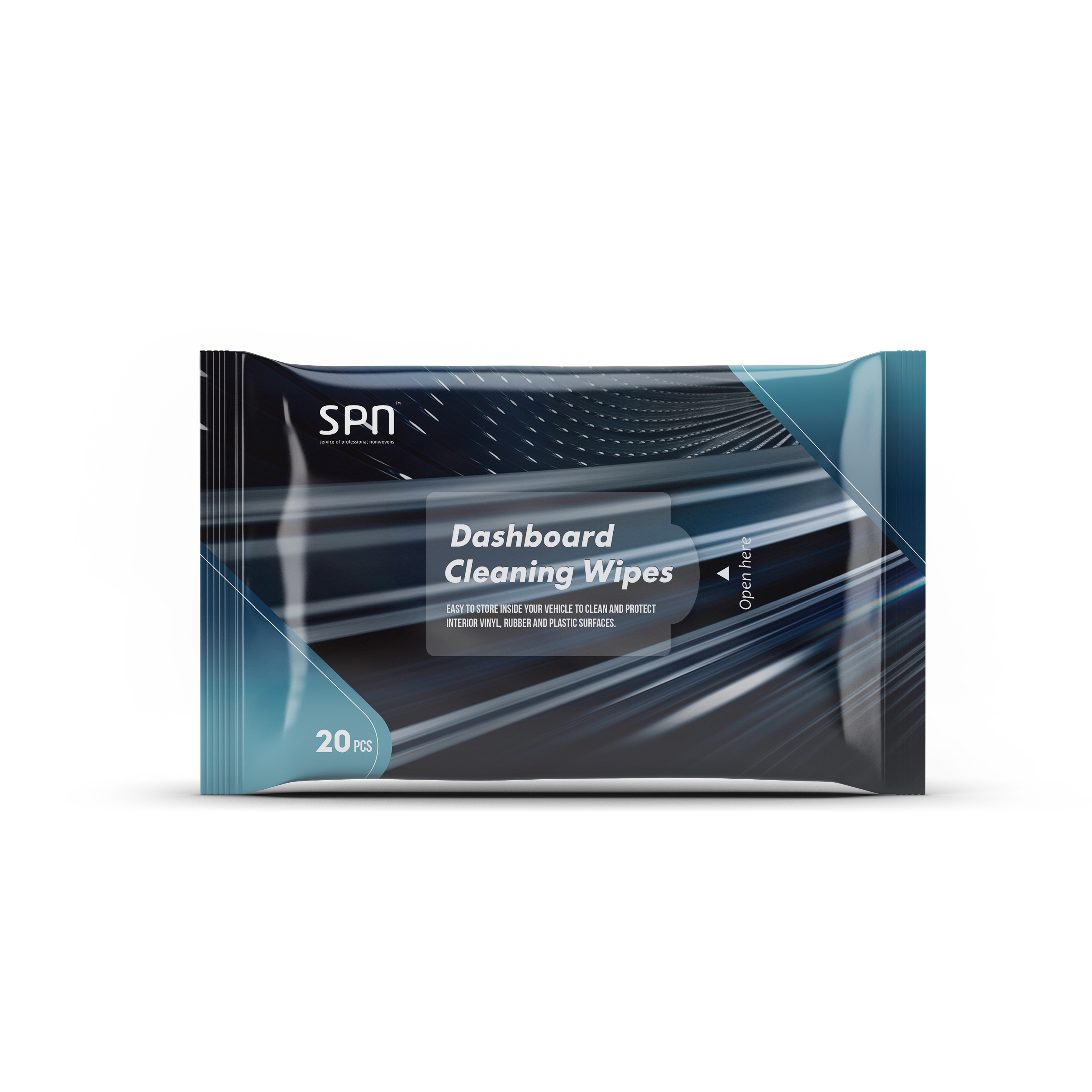
The disposable dashboard wipes from SPN are listed as a 25 × 30 cm format with a microfiber-like surface and a glossy finish. The size gives a buyer something concrete to evaluate for folding and handling. The stated sheen gives the buyer a separate criterion for deciding where to try the product. Compare a finished sample against the actual trim, including both the dry appearance and what the original surface looks like beside it.
Use One Test Patch to Check the Finish
Place the test somewhere that has the same material and sheen as the area you intend to clean. A separate plastic part below the dashboard may be easier to reach, but it may have a different grain or coating. If the chosen area is already marked, use a nearby section with an even starting appearance so you can see the change made by the wipe. Leave enough untouched trim alongside it to make the boundary visible during the comparison.
The finish requirement can be made explicit in a buyer’s brief. If the goal is to keep the original matte appearance, check whether the test patch blends into the surrounding panel after drying. If a uniform gloss is wanted on compatible trim, check the consistency across the full patch and around its edges. For textured sections, look close enough to see whether the grain still holds pale specks. Recording the three observations separately makes it easier to approve a wipe for one part of the vehicle and select a different care method for another.
A sample check can also reveal a practical handling issue. Fold the sheet as a user would and see whether you can keep a flat working face over a broad section and around a curve. If it bunches, the folds may limit contact with the trim. Check that the resulting finish is consistent when the person performing the trial moves from a straight section to a contour.
Conclusion
An even-looking dashboard depends on how the cloth contacts the trim and what the wiped area looks like after drying. Check textured surfaces for remaining particles in the grain, and judge a test patch next to untouched trim under the same light. If you are evaluating wipes from Hangzhou Teyi Nonwoven Fabric Co., Ltd. (SPN), use the desired dry finish as part of the product specification. That gives the buyer and the person using the wipe a clear result to look for.
We stick to High and stable quality control system. products are provided and ensured by advanced machines, state of art technology, and professional team. Please feel free to contact us to start our long-term cooperation.