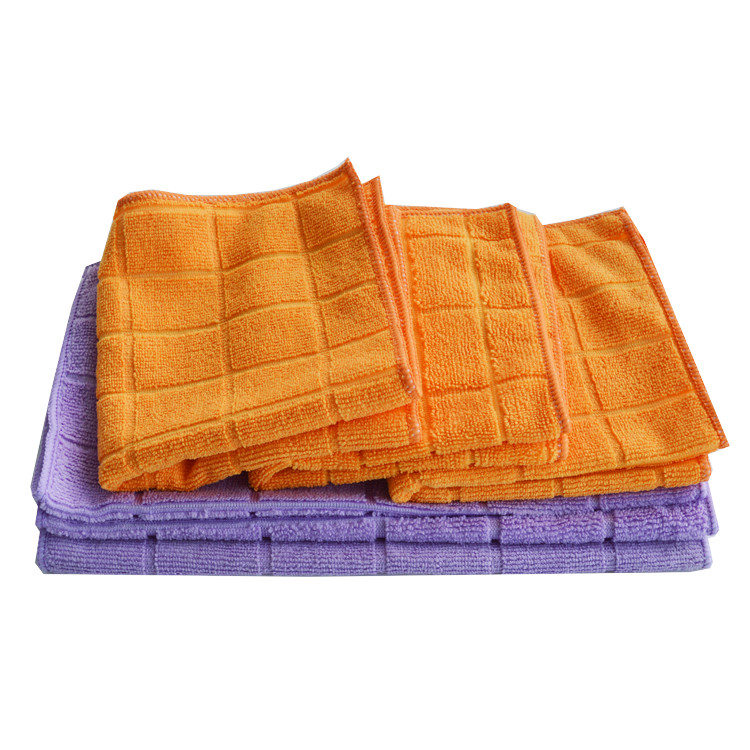
Evaluating high-end cleaning tools is often challenging. Facility managers and serious home users constantly juggle three priorities. You need strong cleaning efficiency. You must ensure surface safety. You also have to manage procurement budgets effectively. Navigating exaggerated marketing claims makes this process much harder. Many buyers overlook the technical specifications of their cleaning cloths. This oversight leads to poor performance and shortened lifespans.
We rely on the Colorful Microfiber Towel 80% Polyester 20% Polyamide as our industry-standard baseline. It provides proven durability and vast daily utility. This guide cuts through the noise in the market. It offers a transparent evaluation framework for your business. You will learn how to select the right towels. We will explore how to implement color-coded sanitary systems. Finally, you will discover proper maintenance protocols. These protocols protect your investment over the long term. Read on to build a reliable and safe cleaning strategy.
Key Takeaways
The Sweet Spot: The 80% polyester (scrubbing/durability) and 20% polyamide (absorbency/softness) blend offers the highest ROI for both B2B bulk buyers and serious home users.
Risk Mitigation: Implementing a strict color-coded system (red, blue, green, yellow) eliminates cross-contamination across different cleaning zones.
Evaluation Metric: GSM (Grams per Square Meter) and edge construction are the true indicators of longevity, not just the blend percentage.
Care Realities: Improper laundering (high heat, fabric softeners) will permanently destroy the microfiber's capillary action, ruining the investment.
The 80/20 Ratio Explained: Why This Blend Dominates the Market
Polyester (80%) vs. Polyamide (20%)
Synthetic cloths blend two primary polymers. They are polyester and polyamide. We must define their specific roles clearly to understand their performance. Polyester acts as the structural backbone of the fabric. It provides essential durability and aggressive scrubbing power. It also generates a static electric charge when rubbed across a surface. This charge attracts dust and loose particles effortlessly. Polyamide serves a very different function. It acts as the absorbent core. Polyamide holds water deep inside the cloth matrix. It also delivers a exceptionally soft touch. This softness prevents microscopic scratches on delicate surfaces. Combining them creates a highly functional, balanced tool.
Comparative Baseline
You will find various blends on the market today. We objectively compare the 80/20 ratio against other common options to establish a trustworthy baseline. The 90/10 blend is much cheaper to produce. However, it severely lacks absorbency. It feels rougher in the hand and often scratches sensitive finishes like clear-coated wood. Alternatively, you might see 70/30 blends. These are exceptionally soft and plush. They are superior for elite auto detailing tasks where paint correction is critical. Yet, they remain cost-prohibitive for high-volume commercial janitorial work. The 80/20 ratio hits the perfect middle ground. It delivers excellent performance without breaking your operational budget.
Blend Ratio (Poly/Polyamide)
Primary Characteristics
Ideal Use Case
90/10
Rougher texture, low absorbency, budget-friendly
Disposable tasks, greasy mechanical wipe-downs
80/20
Balanced softness, high durability, strong absorbency
Commercial janitorial, versatile home cleaning
70/30
Ultra-soft, extreme water retention, higher cost
Elite auto detailing, delicate personal care
The "Split Fiber" Mechanism
Many brands claim their cloths work like magic. In reality, the effectiveness comes purely from mechanical engineering. Manufacturers use a precise chemical and thermal process to alter the threads. They split the synthetic fibers during production. A single fiber is typically smaller than 1/100th the diameter of a human hair. This splitting process creates millions of microscopic hooks and channels. These tiny hooks scoop up dirt, grease, and liquid mechanically. They trap microbes inside the fiber matrix until you wash the cloth. Unsplit fibers simply push dirt around the surface. Split fibers capture it entirely. This mechanical reality makes split synthetic cloths far superior to traditional cotton towels.
Systematizing Safety: The Business Case for Colorful Microfiber Towels
Cross-Contamination Prevention
Safety is paramount in commercial and healthcare settings. Moving a cleaning cloth from a restroom to a kitchen prep area is dangerous. It spreads harmful bacteria rapidly across zones. Visual management prevents these critical errors from happening. Facilities must implement strict visual barriers to protect occupants. Using brightly hued cloths solves this problem instantly. It creates a physical and visual separation of sanitary zones. Your staff will never confuse a toilet cloth for a dining table cloth again.
Standard Color-Coding Framework
The global cleaning industry relies on a universal color system. This framework guarantees high sanitary standards and aligns with institutional best practices. You should integrate this exact framework into your daily operations.
Red: Designate these for high-risk sanitary areas. Use them strictly on toilets, urinals, and restroom floors.
Yellow: Assign these to lower-risk sanitary areas. They work perfectly on restroom sinks, mirrors, and dispensers.
Green: Reserve these exclusively for food preparation. Keep them in commercial kitchens, breakrooms, and dining zones.
Blue: Use these for general purpose tasks. They are ideal for glass, desks, common areas, and office spaces.
Operational Scalability
Color-coding drastically improves your operational scalability. It reduces language barriers during onboarding and staff training. Employees instantly recognize which tool belongs in which area. This standardizes your commercial cleaning procedures globally across multiple facility locations. It also streamlines daily workflows for supervisors. Managers can easily monitor compliance from a distance. If someone uses a red cloth on an office desk, it is immediately obvious to anyone nearby. This level of visual accountability protects your facility, your staff, and your overall business reputation.
Evaluation Criteria: How to Shortlist Professional-Grade Towels
GSM (Grams per Square Meter) Profiling
Blend ratio is only half the story when selecting products. You must also evaluate the GSM closely. GSM stands for Grams per Square Meter. It measures the density and physical weight of the fabric. Higher GSM means a thicker, more plush cloth. You should match the GSM to your specific operational needs.
GSM Range
Weight Category
Best Applications
200-250 GSM
Lightweight / Utility
Single-use messes, high-turnover facility tasks
300-350 GSM
Medium / Standard
General surface cleaning, daily commercial janitorial
400+ GSM
Heavy / Plush
Automotive buffing, hair drying, luxury dusting
Edge Construction
You must inspect the edge construction closely before buying. Edges indicate the overall durability and safety of the product. Overlocked stitched edges prevent fraying over thousands of uses. However, cheap stitching often uses rigid polyester threads. These hard threads cause micro-scratches on sensitive surfaces like television screens or automotive paint. Sonic-cut borderless designs offer a safer alternative for delicate tasks. They have no rough edges to drag across a finish. Evaluate your surface tolerance before choosing an edge type.
Absorption Testing
Marketing claims often exaggerate product absorbency to drive sales. You can easily verify these claims yourself upon receiving a sample. Perform a simple water droplet test. Pour a small amount of water onto a flat, non-porous table. Place the cloth gently over the puddle. True 80/20 polyamide blends absorb the liquid instantly. The water wicks up into the fibers immediately without any added pressure. Inferior blends simply push the water around the table. They leave streaks and beads behind. This basic test exposes low-quality products instantly.
Application Guide: Matching the Towel to the Surface Task
Commercial Janitorial & Facility Management
Facility managers face strict efficiency demands every single day. Your tools must perform reliably under heavy daily use. Focus on wet-cleaning efficacy when evaluating your options. High-quality synthetic cloths require far less cleaning solution to achieve pristine results. The microscopic hooks do the heavy lifting mechanically. This reduces your overall chemical usage significantly across the building. It creates a safer environment for building occupants by limiting VOC exposure. It also lowers your ongoing supply expenses month over month.
Automotive Detailing
Auto detailing requires extreme precision, patience, and care. Modern clear coat finishes are highly susceptible to visible damage. You must balance supreme softness with deep water absorption. Proper 80/20 cloths excel at wax and sealant removal. They trap the dried wax residue without marring the soft paint beneath. They are also essential for modern waterless washes. The split fibers pull abrasive dirt particles away from the surface quickly. This lifting action prevents dreaded swirl marks entirely. Always use high-GSM, tagless cloths to ensure maximum safety on exterior automotive paint.
Personal Care & Salon Use
Many people now use these professional tools for personal care. They offer massive benefits for salons and daily home routines. Traditional cotton terry cloth is surprisingly abrasive on the human body. It causes severe friction damage to delicate wet hair cuticles. It also irritates sensitive facial skin during daily makeup removal. Upgrading to a premium synthetic blend solves this issue completely. The ultra-smooth fibers reduce friction dramatically. They dry hair much faster while minimizing unwanted frizz. They also cleanse faces gently without over-exfoliating the skin barrier.
Implementation Risks and Lifecycle Management (Care Protocols)
The Heat Threat
Poor laundering practices ruin more cloths than daily physical wear. You must understand the severe heat threat. Polyamide and polyester are essentially manufactured plastics. They melt when exposed to high environmental temperatures. Industrial tumble drying often destroys entire fleets of cleaning cloths overnight. The high heat literally fuses the split fibers back together. Once melted, the cloth loses its capillary action permanently. It will feel stiff and refuse to absorb water. Always dry them on the lowest possible heat setting. Air drying on a rack is the safest possible method for maximizing longevity.
Chemical Vulnerabilities
Chemicals also pose a massive threat to fabric longevity. You must avoid commercial fabric softeners entirely. Softeners coat the synthetic fibers in a thin, waxy residue. This residue clogs the microscopic hooks completely. The cloth will become water-repellent and entirely useless for cleaning. Bleach presents another severe chemical vulnerability. Bleach aggressively degrades the delicate polyamide core over time. It destroys the soft texture and ruins the water retention capability. Keep these specific laundry chemicals far away from your supply.
SOP for Procurement & Maintenance
You need a strict standard operating procedure for facility maintenance. Follow these practical steps to protect your tools.
Wash new color batches separately for the first few cycles. This strictly prevents dye bleeding between different cloths.
Use dedicated microfiber detergents when possible. Alternatively, use clear liquid formulas free of perfumes and brighteners.
Never wash them alongside traditional cotton towels. The synthetic hooks will aggressively grab the loose cotton lint in the wash.
Agitate heavily in the washing machine to release trapped dirt and grease effectively.
Inspect edges regularly and discard frayed items immediately to prevent unintended surface damage.
Conclusion
Selecting the right cleaning tools impacts your daily operations deeply. The 80% polyester and 20% polyamide blend stands out clearly as the optimal choice. It remains the most pragmatic option for virtually any professional environment. It perfectly balances initial procurement cost, top-tier performance, and long-term longevity. You get the robust scrubbing power of polyester combined seamlessly with polyamide softness. We highly advise buyers to verify quality before making large wholesale commitments. Request sample packs first. Test the GSM accuracy yourself and perform the water droplet test. Inspect the edge stitching closely under good lighting. These small, deliberate steps ensure you secure genuine, professional-grade tools for your facility.
FAQ
Q: What is the difference between an 80/20 and a 70/30 microfiber towel?
A: The numbers represent the polyester to polyamide ratio. An 80/20 blend provides an excellent balance of durability and absorbency for general use. A 70/30 blend contains more polyamide. This makes it significantly softer and more absorbent. The 70/30 is superior for high-end auto detailing where delicate clear coats require maximum protection. However, the higher polyamide content makes 70/30 cloths more expensive than the highly versatile 80/20 standard.
Q: Can I wash different colored microfiber towels together?
A: You should wash different colors separately during the first few cycles. New brightly dyed cloths often bleed color initially. Washing a new red cloth with a white one will cause pink staining. After several washes, the dyes typically set. However, commercial facilities should always wash them separately by color. This practice maintains strict sanitary separations, ensuring restroom cloths never cross-contaminate kitchen cloths inside the washing machine.
Q: How long should a professional 80/20 microfiber towel last?
A: A high-quality professional cloth has a very long lifespan. You can expect a realistic lifecycle of 300 to 500 wash cycles. You will only achieve this if you follow strict care protocols. You must avoid fabric softeners, bleach, and high heat drying entirely. If you launder them correctly, they will maintain their structural integrity and absorbent capillary action for years before needing replacement.
Q: Does GSM matter more than the blend ratio?
A: No, GSM and the blend ratio work entirely in tandem. You cannot judge a cloth by weight alone. A high GSM cloth with a poor 90/10 blend will feel heavy but lack absorbency. It will simply push water around instead of absorbing it. Conversely, a medium 300 GSM cloth with a true 80/20 blend will dramatically outperform it. Always evaluate both metrics together to determine actual quality.
We stick to High and stable quality control system. products are provided and ensured by advanced machines, state of art technology, and professional team. Please feel free to contact us to start our long-term cooperation.