Sourcing the right material for commercial and industrial cleaning requires a delicate balance. You must weigh unit economics, liquid retention, and structural integrity. Finding the perfect wipe goes far beyond simply checking the lowest price tag. It requires matching specific fabric mechanics to the exact operational job at hand.
Procurement teams and product managers face a constant challenge evaluating countless material options. Substandard materials often lead to poor absorption, excessive linting, and compromised safety protocols. These material failures disrupt workflows. They also risk severe cross-contamination in sensitive environments like healthcare and food service.
Spunlace stands out as the industry standard for high-performance wipes. It relies on a chemical-free, hydroentangled bonding process to deliver unmatched durability and softness. We built this article to give you a highly practical, evidence-based framework. You will learn exactly how to evaluate, specify, and source spunlace fabric for specific wiping applications.
Key Takeaways
- Process Over Chemicals: Spunlace relies on high-pressure water jets (hydroentanglement) rather than chemical binders, resulting in a low-lint, highly absorbent disposable nonwoven wipe.
- Blend Dictates Performance: Adjusting the ratio of fibers (e.g., polyester, viscose, wood pulp, or cotton) fundamentally alters the wipe's cost, absorbency, and environmental footprint.
- Application Specificity: Different environments—from industrial degreasing to foodservice prep—require distinct spunlace specifications (GSM, pattern, and fiber mix) to meet compliance and performance standards.
The Mechanics of Spunlace in a Disposable Nonwoven Wipe
The Hydroentanglement Process
Traditional nonwoven fabrics often rely on thermal melting or chemical adhesives to bind loose fibers together. Spunlace abandons these methods entirely. Instead, it utilizes an advanced hydroentanglement process. High-pressure water jets pierce a loose web of fibers. The immense water pressure forces individual fibers to loop and wrap around one another. This intense physical friction locks the fibers into a cohesive, tight web. Because the process uses only pure water, it avoids chemical binders completely.
Structural Outcomes and Durability
This unique physical bonding creates exceptional structural outcomes. Hydroentangled fabrics mimic the soft, flexible drape of woven textiles. They do not feel stiff or plasticky. More importantly, spunlace maintains incredible wet strength. You can saturate the fabric heavily in water, harsh solvents, or commercial disinfectants. It resists tearing and puncturing even under heavy scrubbing pressure. Workers can apply aggressive friction without destroying the cloth.
The Low-Lint Advantage
Contamination control remains critical in high-stakes environments. Manufacturing cleanrooms, automotive painting booths, and surgical suites cannot tolerate stray fibers. Chemical binders in standard wipes degrade when exposed to solvents, shedding loose fibers onto surfaces. Spunlace completely bypasses this risk. The tight, mechanical entanglement locks fibers securely in place. This exceptional low-lint profile makes spunlace mandatory for contamination-sensitive applications.
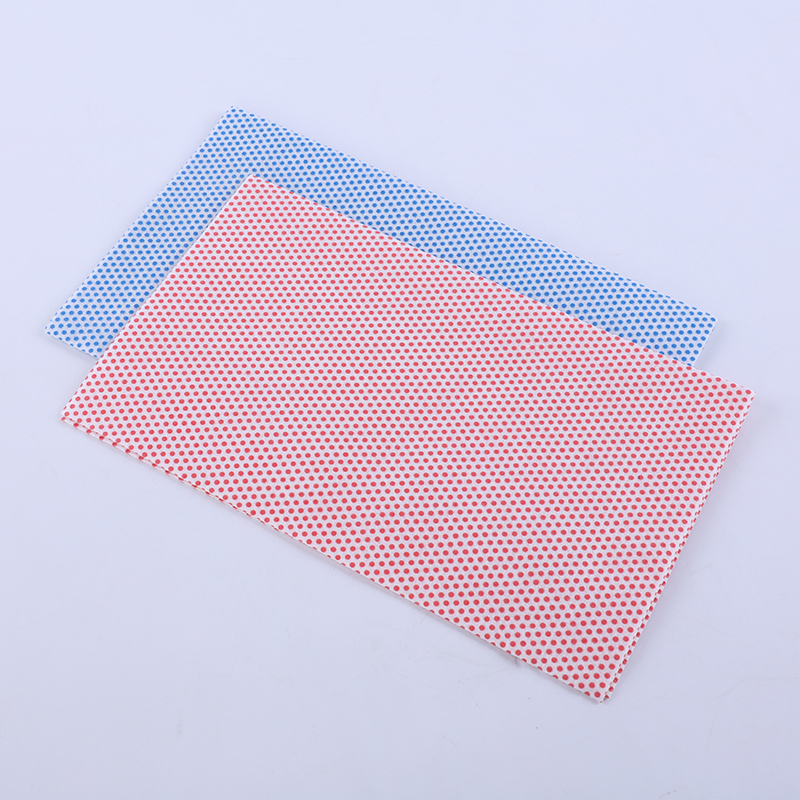
Material Blends: Engineering Spunlace Cleaning Wipes for Specific Outcomes
You cannot treat all spunlace equally. Manufacturers engineer spunlace cleaning wipes by blending different base fibers. The specific ratio directly dictates the final performance profile.
Polyester (PET) and Viscose (Rayon) Blends
The PET and Viscose blend represents the absolute commercial standard. Polyester (PET) acts as the structural backbone. It provides robust tensile strength, abrasion resistance, and durability. Viscose acts as the sponge. As a regenerated cellulose fiber, viscose naturally attracts and holds moisture. Procurement teams must balance these two properties. A 70% PET / 30% Viscose blend creates a tough, scrub-ready wipe. A 30% PET / 70% Viscose blend yields a softer, highly absorbent cloth ideal for capturing large liquid spills.
Integrating Wood Pulp for Heavy-Duty Use
Heavy industry demands aggressive oil and grease absorption. We highly recommend considering wood pulp cleaning wipes for these severe environments. Manufacturers hydroentangle natural wood pulp alongside synthetic fibers like PET or Polypropylene (PP). Wood pulp introduces a rougher, highly textured surface profile. This texture actively scrapes away stubborn grime. Furthermore, wood pulp absorbs heavy hydrocarbons and machinery oils far better than standard viscose. It also lowers the overall material cost, creating a highly economical solution for demanding industrial shop floors.
100% Cotton and Biodegradable Innovations
The global market continues shifting rapidly toward sustainability. Corporations face immense pressure to reduce synthetic plastic waste. 100% cotton spunlace addresses this demand directly. It offers a premium, biodegradable, and eco-compliant wiping solution. Cotton feels exceptionally soft and holds liquid beautifully. However, buyers must prepare for realistic trade-offs. Agricultural supply chains make cotton noticeably more expensive than synthetic alternatives. You will pay a distinct cost premium to achieve these ESG (Environmental, Social, and Governance) targets.
Spunlace vs. Alternative Nonwoven Technologies
Evaluating nonwoven materials requires a transparent baseline. We evaluate fabric types primarily across three dimensions. First, we look at GSM (grams per square meter), which dictates thickness and bulk. Next, we measure total liquid holding capacity. Finally, we test abrasion resistance against rough surfaces.
Table 1: Performance Comparison of Common Nonwoven Technologies
| Technology | Primary Bonding Method | Best Feature | Ideal Application |
| Spunlace | High-pressure water jets | High tensile strength, low lint | Surface disinfection, janitorial, foodservice |
| Meltblown | Extruded polymer microfibers | Exceptional oil absorption | Industrial spill kits, grease removal |
| Needle-Punch | Barbed needles tangling fibers | High loft, extreme thickness | Heavy filtration, acoustic insulation |
| Thermal Bonded | Heat melting polymer fibers | Low production cost | Lightweight hygiene products, liners |
Spunlace vs. Meltblown
Meltblown fabrics consist of ultra-fine synthetic microfibers. They excel at pure oil absorption. Many industrial spill kits rely heavily on meltblown pads. However, meltblown lacks serious tensile strength. It tears easily when pulled or rubbed over sharp edges. Spunlace offers vastly superior versatility. It withstands heavy multi-surface friction, making it far more suitable for active human wiping tasks.
Spunlace vs. Needle-Punch and Thermal Bonded
Needle-punch creates very thick, bulky materials suited for carpets or heavy filters. Thermal bonded fabrics are cheap but often feel stiff and papery. We must clarify why spunlace strictly dominates the market for disposable nonwoven wipes. Spunlace achieves the absolute closest approximation to woven textiles. It delivers genuine cloth-like softness and drape. It provides this quality without the enormous manufacturing bottlenecks associated with traditional weaving looms.
Application Matrix: Specifying the Right Wipe for the Job
No single wipe solves every problem. You must match the fabric specification to the specific commercial environment.
Janitorial and Institutional Cleaning
Janitorial teams execute high-frequency cleaning tasks across massive square footages. They scrub concrete, rough tile, and textured plastics. You should require high PET ratios for these environments. High polyester content ensures the wipe survives rough surface abrasion. Additionally, synthetic blends ensure strict compatibility with quaternary ammonium compounds (quats). Natural fibers can sometimes bind to quats, lowering the chemical efficacy of the disinfectant. A high-PET spunlace prevents this binding entirely.
Foodservice and Hospitality
Restaurant kitchens present unique safety challenges. You must position nonwoven kitchen wipes strategically. Cross-contamination between raw meat stations and fresh prep areas can cause severe outbreaks. Foodservice operations require color-coded spunlace systems. A red wipe handles raw meat. A blue wipe handles glass. A green wipe handles produce. These wipes demand food-safe certifications. They also require maximum absorbency for rapid spill response and a strict low-lint profile to keep fibers out of food.
Healthcare and Sanitization
Hospitals operate under zero-margin-for-error conditions. Healthcare sanitization requires exact liquid release rates. EPA-registered disinfectants mandate specific surface dwell times. A surface might need to remain visibly wet for a full three minutes to kill specific pathogens. The fabric must hold the caustic disinfectant without chemically degrading. It must then release that liquid evenly across the surface. Spunlace engineered for healthcare guarantees this steady, predictable fluid release.
Procurement Realities: Risks, Compliance, and True Yield
Verifying Specifications and Avoiding Drift
Unverified suppliers present a massive risk to procurement teams. We often warn buyers about "specification drift." You might initially approve a 60 GSM wipe. Over twelve months, a dishonest supplier might subtly reduce the weight to 55 GSM, then 50 GSM. Workers suddenly notice the wipes falling apart. You must consistently audit your inbound materials. We recommend a strict internal validation process.
- Audit the GSM: Weigh random samples from every bulk delivery.
- Verify the Fiber Blend: Request laboratory breakdown reports to ensure you actually received the 70/30 ratio you ordered.
- Check Tensile Strength: Demand current tensile strength test reports (both wet and dry) from the manufacturer.
Regulatory and ESG Pressures
Global plastic-reduction directives deeply impact nonwoven sourcing. The EU Single-Use Plastics Directive heavily scrutinizes traditional PET blends. Buyers must anticipate tightening global regulations. You should begin phasing in sustainable alternatives now. Introduce small pilot programs using biodegradable or cotton-blended spunlace. Testing these materials early ensures you can transition smoothly without abruptly disrupting daily operations.
Calculating True Yield and Operational Efficiency
Procurement teams must shift the conversation from "cost per roll" to "cost in use." Buying the cheapest lightweight wipe frequently backfires. Workers simply grab three flimsy wipes instead of one high-quality spunlace wipe. A properly specified, robust spunlace wipe dramatically reduces actual material consumption. It also reduces chemical waste, as the wipe holds and deploys expensive solvents more efficiently. Maximizing this operational yield ultimately lowers your overall facility maintenance spending.
Conclusion
Accurately specifying spunlace fabric delivers massive strategic value to your operations. It protects sensitive environments from contamination, improves worker efficiency, and ensures compliance with strict sanitation protocols. You avoid massive hidden costs when you move beyond basic price shopping and start analyzing material science.
Remember, no universal "best" wipe exists on the market. The optimal choice always depends on alignment. You must strictly align the specific fiber blend, GSM, and fabric texture with your intended commercial application. Heavy machinery demands different material profiles than an operating room or a commercial kitchen.
Take proactive action on your next procurement cycle. Stop accepting generic material descriptions. Request formal technical data sheets (TDS) and material safety data sheets (MSDS) from your suppliers. Most importantly, demand sample rolls and conduct controlled, on-site trial runs. Secure your bulk purchasing contracts only after your frontline workers verify the material performance in the real world.
FAQ
Q: What is the typical GSM range for commercial spunlace cleaning wipes?
A: Standard ranges vary by application. Lightweight tasks typically require 35 to 45 GSM. Medium-duty surface wiping relies on 50 to 60 GSM. Heavy-duty industrial applications demand 70 GSM or higher. Higher thickness directly increases both fluid capacity and upfront price, but significantly improves durability.
Q: Can spunlace nonwoven wipes be flushed down commercial drains?
A: No. Standard PET and Viscose spunlace blends will not break down in water and will cause severe plumbing blockages. You must dispose of them in solid waste bins. Only specialized, specifically engineered dispersible spunlace materials qualify for legitimate flushable claims.
Q: How does wood pulp improve a disposable wipe?
A: Wood pulp offers incredible natural absorbency at a low cost. When manufacturers hydroentangle wood pulp with strong synthetic fibers, the resulting wipe gains aggressive texture. This synergy perfectly balances extreme oil-absorbing capacity with the tear resistance needed for heavy industrial scrubbing.
Q: Are spunlace wipes compatible with all industrial solvents?
A: They are highly compatible with most common cleaning agents. However, highly aggressive solvents like MEK (Methyl Ethyl Ketone) or pure acetone can dissolve certain synthetic plastics. You must specifically verify your spunlace fiber mix against your exact chemical roster to prevent dangerous material degradation.


