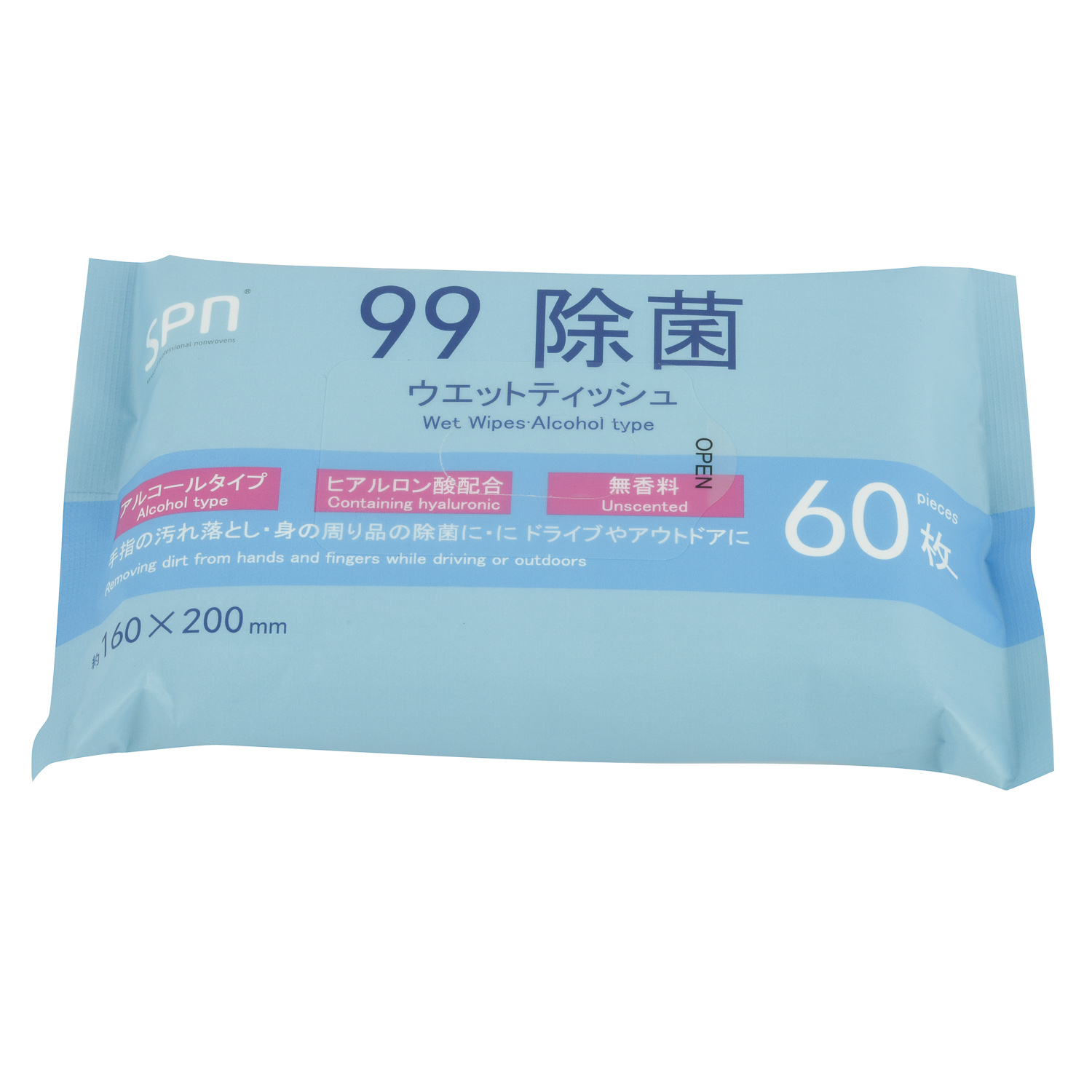
Specifying the correct Grams per Square Meter (GSM) is the single biggest factor in balancing product performance and unit economics. Navigating this metric often feels like a guessing game for procurement teams. The consequences of getting it wrong are significant and immediate. Over-speccing GSM drains profit margins rapidly as raw material costs multiply exponentially. Conversely, under-speccing leads directly to product failure on the market.
You might face substrate degradation, tearing, poor moisture retention, and inevitable client complaints. We designed this comprehensive guide as an objective framework for procurement managers and product developers. It provides clear parameters to accurately match GSM to specific commercial and industrial use cases. By the end, you will understand how to evaluate fiber blends, avoid common manufacturing pitfalls, and secure the exact specifications your spunlace nonwoven wipes require.
Key Takeaways
GSM directly dictates liquid capacity and tensile strength: But thicker isn't automatically better—it must match the required fluid-to-fabric ratio.
Application-specific tiering: 30–45 GSM for light personal care, 45–60 GSM for standard surface cleaning, and 60–80+ GSM for heavy-duty industrial tasks.
Material blends matter: GSM must be evaluated alongside fiber composition (e.g., polyester/viscose ratios or wood pulp integrations) to accurately predict performance.
Manufacturing variance is a risk factor: Buyers must establish strict GSM tolerance limits (± X%) in their vendor Service Level Agreements (SLAs).
The Business Impact of GSM in Spunlace Nonwoven Wipes
Understanding the business impact of GSM begins by looking at your material economics. Raw material weight accounts for the vast majority of roll-good costs. Incrementally increasing your GSM scales costs exponentially at high manufacturing volumes. A mere five-gram increase across one million rolls requires tons of additional raw fiber. It also increases shipping weights and decreases the number of rolls you can fit into a single shipping container.
You must carefully balance cost against performance. Failing to specify the correct GSM introduces several failure modes during production and end-use.
When GSM is too low: You will experience substrate degradation and linting. The fabric lacks the structural integrity to hold required chemical payloads. It dries out too quickly or tears during extraction.
When GSM is too high: Converting machinery often jams. Automated folding blades struggle to cut through excessively thick materials. You also face unnecessary shipping weight and excessive packaging requirements to accommodate bulkier wipe rolls.
The market context has shifted dramatically in recent years. Brands are optimizing disposable nonwoven wipes for exact use cases rather than relying on one-size-fits-all materials. This precision engineering reduces waste and ensures the final product meets consumer expectations without eroding your profit margins.
GSM Evaluation Framework: Matching Weight to Application
Selecting the right weight requires matching the physical properties of the fabric to its intended environment. We categorize spunlace nonwoven wipes into three primary application tiers.
Light-Duty (30–45 GSM)
Light-duty materials prioritize gentle interaction and cost-efficiency. Primary applications include baby wipes, facial makeup removers, and single-use sanitary wipes. In these scenarios, the fabric does not face aggressive scrubbing or harsh chemical solvents.
Success criteria in this tier revolve around softness and a skin-friendly texture. The fabric must offer rapid liquid absorption for light moisture profiles. Because these products are typically used once on sensitive skin and then discarded, structural rigidity takes a back seat to tactile comfort. Using a higher GSM here simply wastes money without delivering additional consumer benefits.
Medium-Duty (45–60 GSM)
Medium-duty wipes represent the most versatile category. Primary applications include standard household surface cleaners, automotive interior wipes, and custom GSM disinfecting wipes. These tasks require a resilient fabric capable of surviving moderate friction.
Success criteria demand balanced cross-directional (CD) strength for scrubbing. The wipe must not stretch or pill when rubbed against countertops or car dashboards. Furthermore, this GSM range provides optimal liquid retention for EPA-registered sanitizing solutions. Sanitizers require specific surface dwell times to effectively kill bacteria. A medium-duty wipe holds enough liquid to coat a surface thoroughly without evaporating prematurely.
Heavy-Duty (60–80+ GSM)
Heavy-duty environments demand uncompromising strength. Primary applications include industrial degreasing, healthcare grade sanitation, and commercial food service preparation. These wipes clean abrasive surfaces, sharp machinery parts, and heavy grease spills.
Success criteria focus strictly on high tensile strength and tear resistance under aggressive pressure. The material must survive rigorous use without leaving lint behind. We highly recommend exploring wood pulp spunlace wipes in this tier. Integrating wood pulp maximizes solvent and fluid retention without sacrificing structural integrity. It provides an excellent scrubbing texture while remaining highly absorbent.
Beyond Weight: Correlating GSM with Quality and Fiber Blend
Many procurement professionals mistakenly equate a higher GSM directly to a thicker, higher-quality product. This is a flawed assumption. You must look beyond simple weight metrics to fully understand how a wipe will perform.
Thickness and density interact differently depending on the manufacturing process. Calendering processes use heat and pressure rollers to bond the fibers. Heavy calendering compresses the fabric. You might have a high GSM wipe that feels quite thin because it is extremely dense. Conversely, a lower GSM wipe produced utilizing high-loft techniques might feel thicker and fluffier in the hand. You must align the hand-feel with consumer expectations.
You must also evaluate GSM alongside tensile strength testing. We measure strength in two directions: Machine Direction (MD) and Cross Direction (CD). MD strength determines if the wipe will elongate or snap during extraction from a tight canister dispenser. CD strength dictates how well the wipe holds together during a side-to-side scrubbing motion. Even a heavy fabric can fail if its MD/CD ratio is poorly balanced.
Fiber composition synergies dictate final performance. Blending viscose for absorbency and polyester for strength fundamentally alters how a specific GSM performs. For example, high-quality spunlace cleaning wipes often use a 50/50 or 70/30 viscose-to-polyester ratio. A 45 GSM wipe rich in viscose absorbs liquid rapidly, while a 45 GSM wipe rich in polyester acts more like a dry dusting cloth. You cannot judge the GSM accurately without knowing the exact fiber blend.
Implementation Risks: What to Verify Before Procurement
Securing the right specification on paper means nothing if the manufacturer cannot produce it consistently. Manufacturing variances pose a significant implementation risk.
You must establish clear tolerance and variance tracking limits. Buyers should always ask for the manufacturer's maximum GSM tolerance. The industry standard usually hovers around ± 5% to 7%. However, precision medical needs often require a stricter ± 3% tolerance. Inconsistent GSM causes severe automated folding machine downtime. If a master roll fluctuates wildly in weight, the tension controls on your converting machines will fail, leading to jams and material waste.
Liquid loading capacity requires rigorous testing. You must verify if your chosen GSM physically holds the intended chemical payload. We measure this through a moisture ratio test. If the fabric lacks sufficient absorbency, the chemical solution pools at the bottom of the canister or flow-pack. This leaves the top wipes bone dry and the bottom wipes oversaturated. A higher GSM or a higher viscose blend usually solves this pooling issue.
Always demand adherence to recognized compliance and testing standards. We recommend utilizing standard test methods outlined by organizations like EDANA or INDA. These standardized guidelines allow you to objectively verify vendor GSM claims. They provide universal testing parameters for absorption, tensile strength, and material thickness. Relying on objective testing prevents costly disputes down the line.
Common Mistakes to Avoid: Do not approve a GSM specification based solely on a dry sample. Always test the fabric saturated in your exact chemical formulation. Some binder chemicals degrade when exposed to harsh solvents, causing the fabric to lose all tensile strength regardless of its initial weight.
How to Shortlist Vendors and Specify Your RFQ
A vague Request for Quotation (RFQ) invites inconsistent vendor responses. To accurately compare suppliers, you must provide highly detailed specifications.
When drafting your spec sheet, include several critical data points beyond just the target GSM. Specify your required fiber blend ratio. Clearly state the desired aperture or pattern type, such as plain, embossed, or mesh. Note your exact roll width requirements and any Outer Diameter (OD) limits for the master rolls. These dimensions ensure the raw materials actually fit onto your converting machinery.
We recommend following a strict, three-step sampling protocol before signing any contracts:
Request standard A4 hand-sheets for tactile and visual inspection. Check for uniform fiber distribution and acceptable hand-feel.
Request pilot machine rolls for wet-testing and chemical compatibility. Saturate the wipe in your formula and measure liquid retention and extraction strength.
Run full converting trials to test machine tension at the specified GSM. Ensure your folding and packaging machinery handles the material without jamming or tearing.
Watch out for significant red flags during vendor evaluation. Avoid vendors unwilling to share their Certificates of Analysis (COAs). A COA proves their quality control department actively tests each batch. Be highly suspicious of vendors offering prices significantly below market rate for high-GSM materials. This often indicates inconsistent weight distribution across the roll, where the edges are dangerously thin, and only the center meets your specification.
Conclusion
Selecting the correct GSM is a critical cross-functional decision. It directly impacts your raw material costs, your factory floor converting efficiency, and ultimate end-user satisfaction. Relying on guesswork inevitably leads to wasted resources and compromised product quality.
Evaluating spunlace nonwoven wipes requires looking at the total physical profile. You must view GSM, fiber blend, and tensile strength as interconnected variables. A perfectly specified wipe balances these three elements to meet the exact demands of its operating environment.
Take action today by reviewing your current material specifications. Contact a technical sales representative to request a comprehensive sample kit. Schedule a chemical compatibility consultation to ensure your liquid formulas perfectly match your chosen spunlace substrates.
FAQ
Q: Can I use the same GSM for both wet and dry spunlace wipes?
A: No. Wet wipes require higher structural integrity to prevent degradation when saturated. They often require a slightly higher GSM or an altered fiber blend compared to dry dusting wipes. Dry wipes rely more on mechanical friction, while wet wipes must support the added weight of the chemical solution without breaking apart.
Q: What is the acceptable GSM tolerance for commercial spunlace nonwoven wipes?
A: The industry standard is typically ± 5%. However, advanced manufacturing facilities can achieve tighter tolerances around ± 3% for medical or critical-environment applications. You must explicitly define this tolerance limit in your supplier contracts to prevent machine jams and ensure consistent product quality.
Q: Does pattern (embossed vs. plain) affect the required GSM?
A: Yes. Embossed or apertured patterns alter the perceived thickness and physical strength of the material. The embossing process can sometimes weaken structural integrity. Therefore, you might require a slight GSM adjustment to maintain the same tensile strength as a plain, flat spunlace fabric.
We stick to High and stable quality control system. products are provided and ensured by advanced machines, state of art technology, and professional team. Please feel free to contact us to start our long-term cooperation.